Intro:
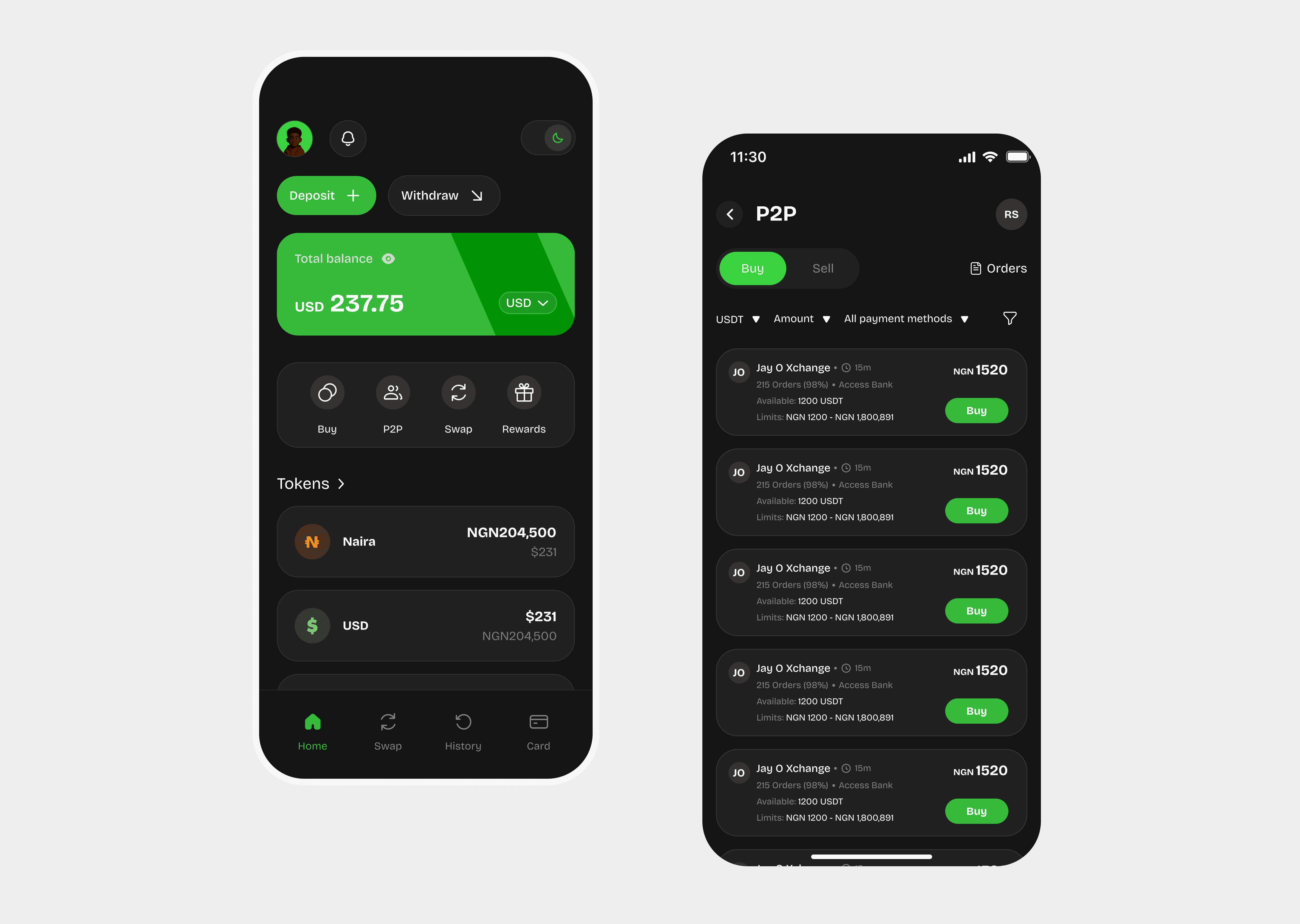
VELO is a multi-currency fintech wallet that allows users to receive, hold, swap, and spend money seamlessly across Naira (NGN), US Dollars (USD), and Cryptocurrency. The app also provides users with a virtual card for everyday online payments, bridging traditional finance and crypto in one simple experience. The goal was to design a product that feels secure, intuitive, and trustworthy, while hiding the underlying complexity of crypto and cross-currency finance.
The problem:
Fintech users who operate across local and international markets face growing difficulty managing their money efficiently. Interviews with freelancers, students, and remote workers revealed that users often rely on multiple apps to receive Naira, collect USD payments, manage cryptocurrency, and make online payments. This fragmented setup leads to constant app-switching, higher fees, and increased risk of errors.
Kick-off:
To address the challenges identified in user interviews, the solution was to design a single, multi-currency fintech app that unifies fiat and crypto while keeping the experience simple.
The product is designed to feel like a familiar fintech wallet first, with crypto capabilities integrated seamlessly rather than treated as a separate, technical system.


Design Process:
I started of with 2 weeks of research, 2 weeks of ideation and wireframing and 4 weeks of visual design, prototyping and iterations. Total of 8 weeks.
Research:
I carried out research mainly through interviews with freelancers, students and remote workers. I gathered data and insights from a total of 30 people and here is what i found:
22 0f 30 (73%) of users use three or more apps to manage local payments, international transfers, crypto, and cards.
19 0f 30 (63%) of users are interested in using crypto, but only 7 users (23%) feel confident navigating existing crypto apps.
20 0f 30 (67%) of users expect features like P2P trading and virtual cards to feel connected to their main wallet balance.
Implementation:
To address this issue,
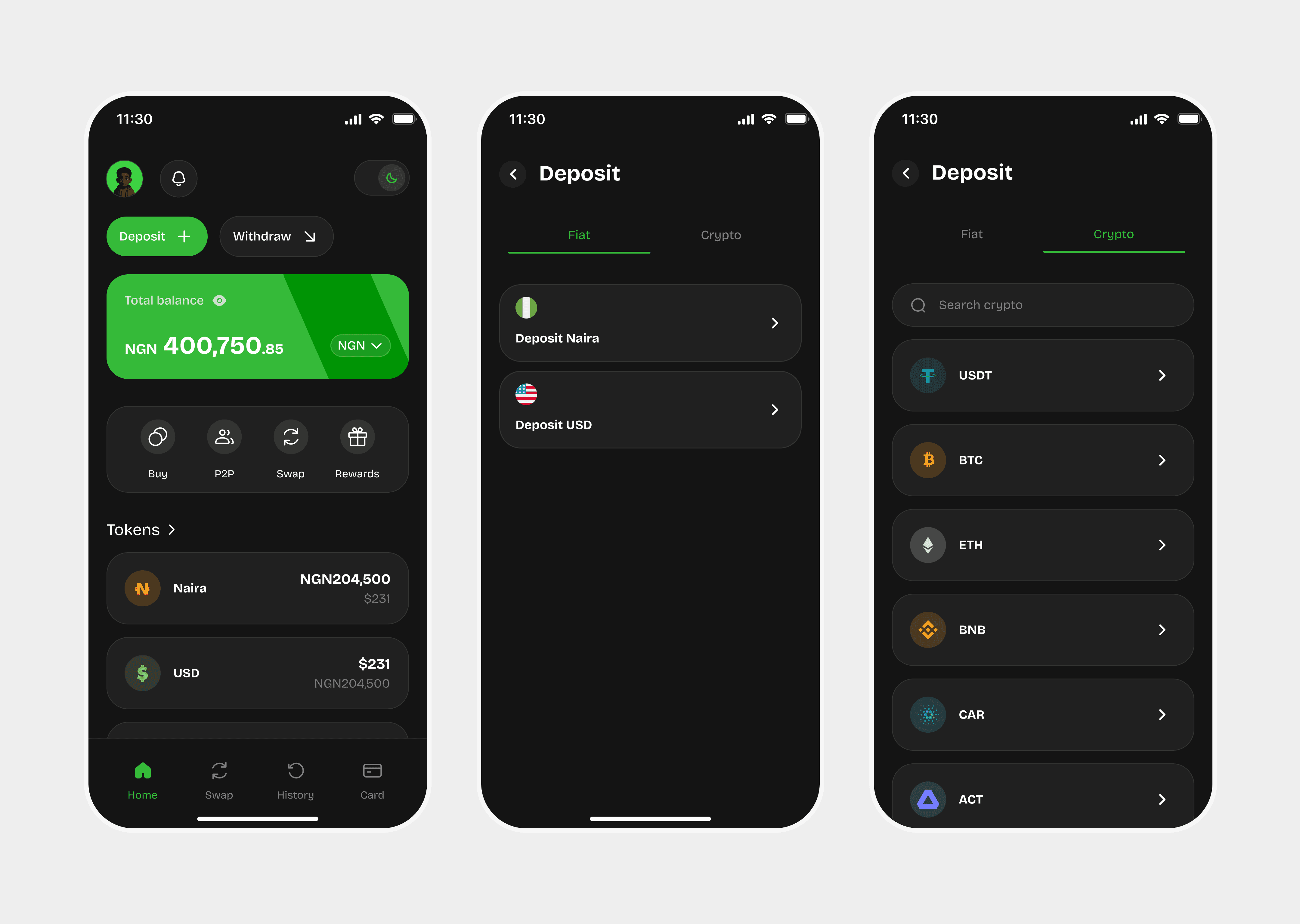
I designed a unified wallet that supports NGN, USD, and crypto within one app, while keeping balances clearly separated for clarity.
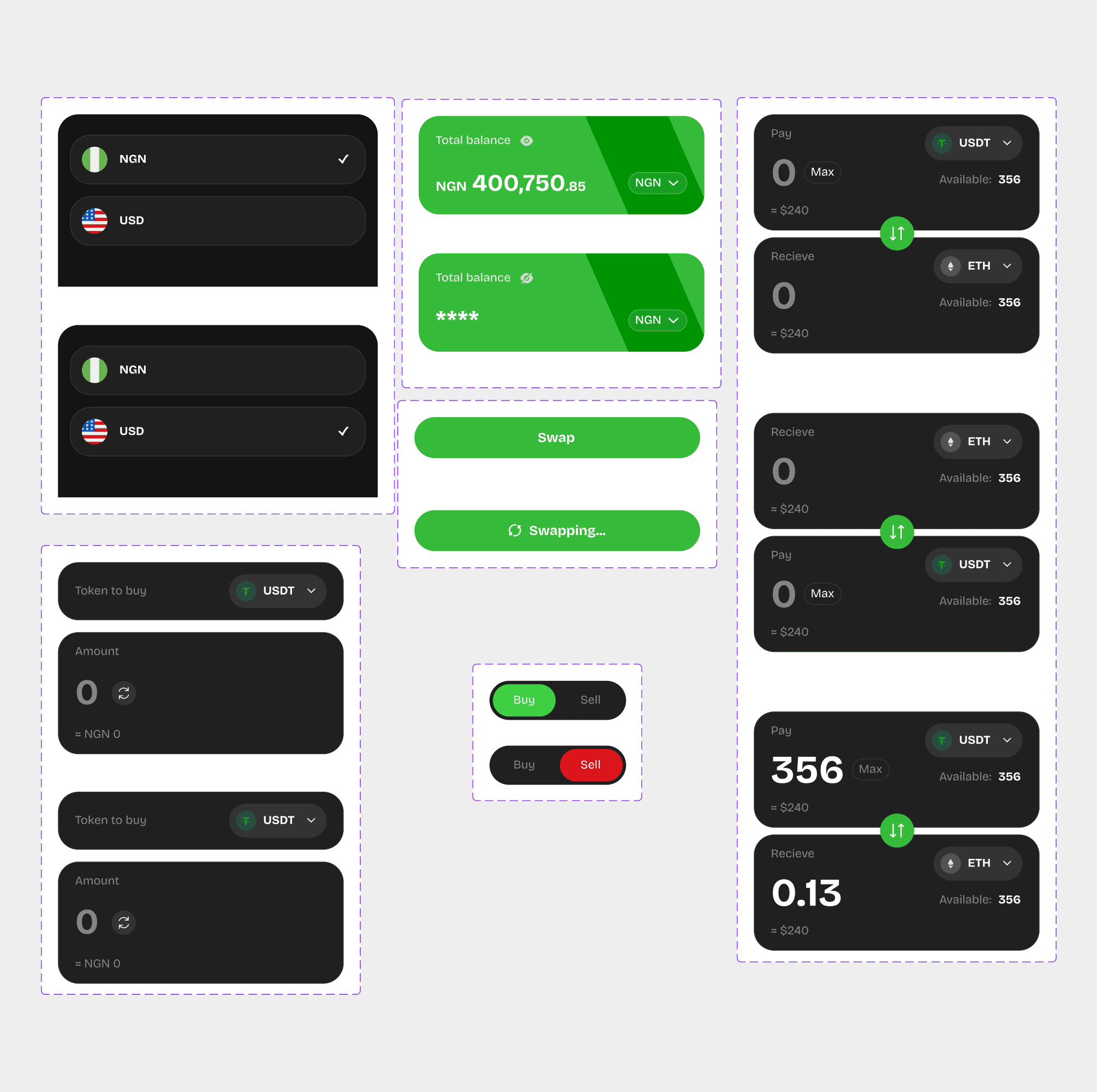
I designed crypto features to feel simple and familiar, using guided flows, clear language, and fintech-first patterns instead of trader-heavy UI.
I designed P2P trading and virtual cards as wallet-powered add-ons, using existing balances and consistent UI patterns rather than standalone flows.
Results:

Lessons:
Working on this project taught me that fintech products don’t become easier to use by adding more features. They become easier when users don’t have to constantly stop and think.
At the beginning, I was focused on combining a lot of functionality into one product: fiat, crypto, swaps, P2P, cards. But as I spoke to users and refined the flows, I realized the real challenge wasn’t just feature availability, as much as that was needed, it was also helping users feel calm and confident while using them.
One of the biggest lessons for me was understanding that users don’t separate their money the same way products do. They don’t think, “I’m using a crypto app now” or “I’m using a banking app now.” They simply want to manage their money in the easiest way possible. That realization shaped almost every design decision in the project.
Another important takeaway was learning when not to push features too aggressively. Treating P2P trading and virtual cards as supporting tools instead of the center of the experience made the app feel much more focused and approachable.
Most importantly, this project helped me become more intentional as a designer. Instead of designing for what looks impressive, I started designing more around what reduces confusion and builds confidence.
Final notes:
This project was an opportunity for me to explore how fintech and crypto can exist together in a way that feels practical and human. Looking back, I’m proud of how the project evolved from a feature-heavy idea into a more focused and unified wallet experience. It pushed me to think more deeply about trust, clarity, and the emotional side of financial products.
Explore another case study
